

Therapy
Getting to the HEART of your child’s development
Your child’s development is our priority. That’s why Just Kids Pediatrics wants to help you find pediatric services that fit your needs. We work hard to build meaningful relationships with families and their caregiving teams, so your child can succeed.
Your child deserves the love, patience and opportunity to reach their full potential.
Speech Therapy
Pediatric speech therapy includes evaluating and treating communication disorders, including speech and language and feeding.
Occupational Therapy
Our role is to assist children in performing “occupations” with the greatest level of independence possible. Childhood occupations include learning in school and playing with friends.
Special training in:
SOS (Sequential Oral Sensory) feeding approach addresses both the sensory processing and the oral motor skills a child needs to eat.
PROMPT Therapy (Prompts for Restructuring Oral Muscular Phonetic Targets), which is a tactile-kinesthetic approach to speech therapy.
AAC Devices for Non-Verbal Children encompass the communication methods used to supplement or replace speech.
Ready to take the first steps?
Here’s how to get started on our sessions.
Doctor’s referral:
Make an appointment with your child's primary care physician.
Express to them your concerns about your child's development.
Have the doctor send us a prescription for services and the appointment notes from your visit.
Once processed, we will contact you to set up a time for the evaluation.
Evaluations:
Comprehensive evaluations are the first step in evidence-based treatment for speech therapy services.
Interview parents/caregivers to determine concerns.
The average time for assessments is 1.0-1.5 hours.
Review the results with the parent/caregiver.
The clinician completes the report with goals.
Parent/caregiver and Clinician determine the frequency and length of sessions pending insurance approval.
Insurance
Occupational Therapy: We accept SoonerCare, Tricare and Centene at this time.
Speech Therapy: We accept SoonerCare, Tricare, Blue Cross Blue Shield, Centene and private pay for other insurances.
Therapy Sessions
JKP offers a wide range of services to fit any schedule. We understand that most parents work, children need naps and taking children out of school for weekly sessions is difficult. Our heart is with your child, and we want to meet you where you are.
Therefore, we offer three options for therapy services:
Office Visits: Standard outpatient therapy services in our office.
Speech/Language/Feeding sessions are typically half-an-hour and occur 1-2 times a week.
Occupational therapy sessions last 30-60 minutes, depending upon the needs of the child.
*Disclaimer: The content of this website does not serve as medical advice, nor does it substitute for a thorough medical evaluation by a health care practitioner. It also does not represent the opinions of any of the mentioned medical institutions or practitioners. Consult a physician or local healthcare provider before changing your healthcare regimen.
Speech Therapy
Speech Development
Growing up isn’t a race, but Child Development experts created these speech and language milestones to give parents an idea of what to expect. Every child is unique, and that means they have their own unique challenges. Our child speech pathologist works with each child to overcome these challenges and improve their lives
If you’re worried about any speech delays, take a look at these red flags:
No babbling by nine months.
No first words by 15 months.
No consistent words by 18 months.
No word combinations by 24 months.
Slowed or stagnant speech development.
Problems understanding your child's speech at 24 months of age.
Strangers having problems understanding child's speech by 36 months of age.
Not showing an interest in communicating.

What can parents do before contacting a speech therapist:
Start talking to your child at birth. Newborns benefit from hearing speech.
Respond to your baby’s coos and babbling.
Play simple games with your baby like peek-a-boo and hide and seek.
Listen to your child. Look at them when they talk to you.
Give them time to respond.
Help them describe what they are doing, feeling and hearing in the course of the day.
Encourage storytelling and sharing information.
Don’t try to force your child to speak.
Read a book aloud.
Sing to your child and provide them with music.
Learning new songs helps your child learn new words and uses memory skills, listening skills and expression of ideas with words.
Expand on your child's words by describing what they point to or label.
*Reach out to your doctor if you suspect that there may be a delay in speech or language development.
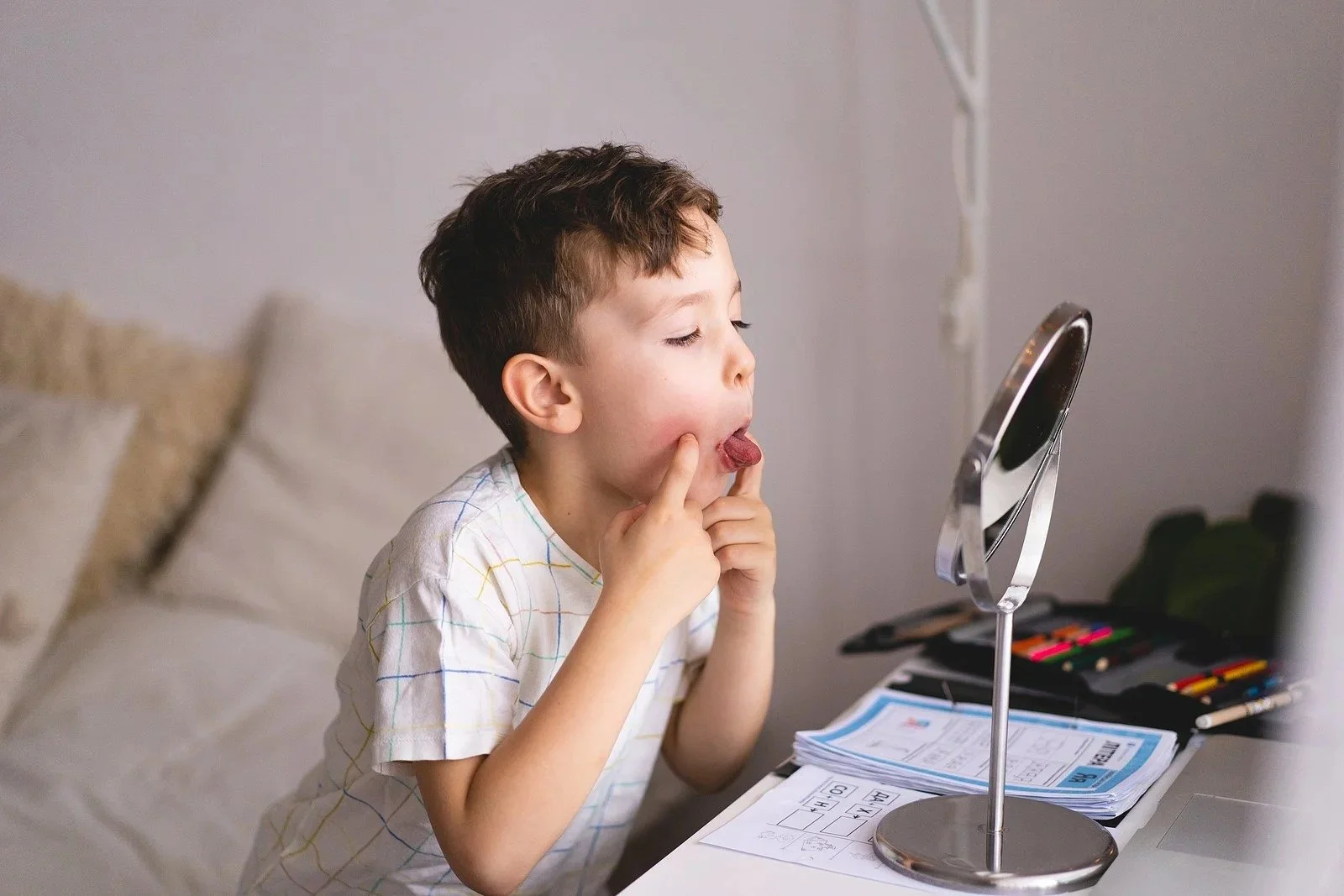
Pediatric speech therapy includes evaluating and treating communication disorders, including speech and language and feeding.
Speech therapy is used for children suffering from diseases or injuries, including:
Articulation and phonological disorders
Nonverbal children with speech/language delays
Stuttering/cluttering
Tongue thrust
Childhood Apraxia of Speech (CAS) and other motor speech disorders
Expressive and receptive language delays
Social/pragmatic disorders
Dysphagia and feeding difficulties
Speech therapists help children learn to communicate through many different modalities and to engage with different environments.
Occupational Therapy
What is Occupational Therapy?
Occupational therapy practitioners have a holistic perspective, focusing on adapting the environment and/or task to fit the person. The person is an integral part of the therapy team. It is an evidence-based practice deeply rooted in science.
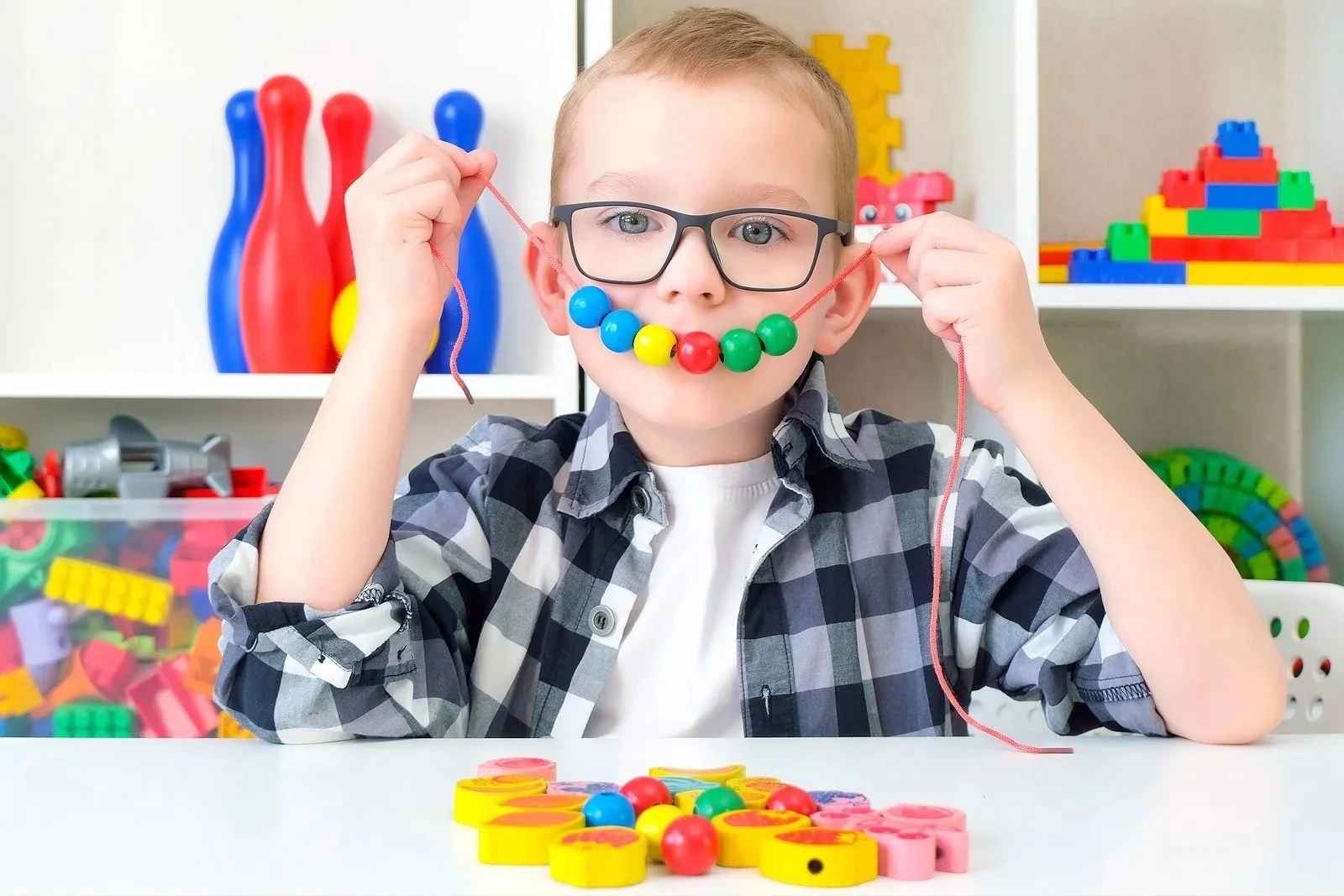
Our occupational therapist helps infants and children achieve independence in various aspects of their daily lives. We facilitate play, learning and self-care skills by improving their fine motor, sensory processing, behavioral and visual perception skills in a fun and engaging setting.
Occupational Therapy may be appropriate if your child has difficulty with:
Writing
Cutting
Upper body and hand strength
Play activities
Dressing
Hygiene skills
Feeding
Fine motor skills
Visual perceptual skills
Visual-motor integration
Educational and cognitive skills
Sensory processing
*Contact your pediatrician if any of these concerns apply to your child.
An Occupational Therapist’s role is to assist children in performing “occupations” with the greatest level of independence possible. Childhood occupations include learning in school and playing with friends.
Occupational therapy can benefit children with a wide variety of diagnoses, including but not limited to autism, birth injuries, cerebral palsy, juvenile rheumatoid arthritis, sensory processing disorders, traumatic brain or spinal cord injuries and more.
Occupational therapists work with children in the following areas:
Sensory management.
Engaging in play activities.
Learning to navigate environments.
Removing barriers.
Helping the child become more focused.
Developing autonomy in daily routine (brushing hair or teeth).
Improving fine motor (grasp/release toys; handwriting skills).
Addressing hand-eye coordination.
Maintaining positive behaviors in all environments.
Evaluating the need for specialized equipment (wheelchairs, splints, bathing equipment, dressing devices).